
How Does Housing Work for College Students at CU Denver? A Complete Guide to Student Housing Options
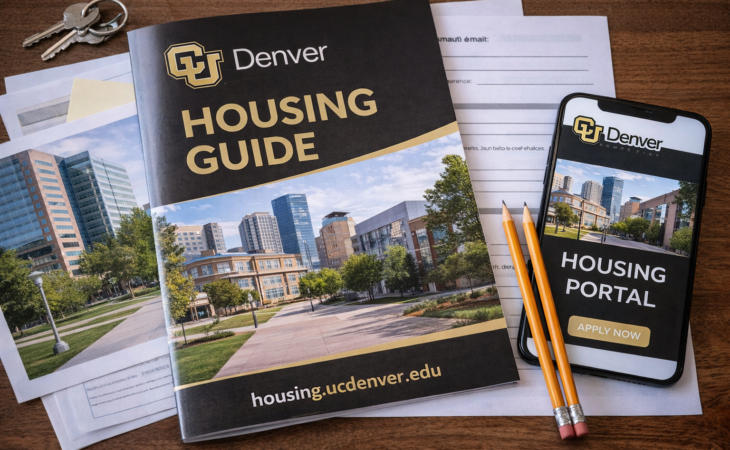
Finding housing as a CU Denver student can feel like a lot. And look, that’s fair. This isn’t your typical college town where student apartments just line the streets near campus. CU Denver sits on the Auraria Campus smack in the middle of downtown Denver. Rent’s not cheap here. Options are all over the place, literally. Dozens of neighborhoods to pick from. It’s a lot to sort through when you’re new.
Let me break it down for you.
On-Campus Housing at CU Denver
CU Denver has two on-campus housing options, both right there next to your classes, the Auraria Library, and the Tivoli Student Union. Roll out of bed and you’re basically there.
City Heights Residence Hall is the spot for first-year CU Denver students. They opened it in 2021 so everything still feels pretty fresh. Houses over 500 residents. Community-style rooms. City Heights Dining Hall is right in the building so you don’t have to trek anywhere for food. The residence hall connects to the Learning Commons and you can walk to Union Station and Larimer Square from there. If you want the full freshman experience and actually meeting people, this is it.
Lynx Crossing Residence Hall is more for upperclassmen and grad students. Actually serves all three schools on the Auraria Campus (CU Denver, MSU Denver, and Community College of Denver). These are suite-style apartments with full kitchens. Studios up to four-bedrooms. Fitness center, free laundry, study lounges, even a half basketball court. Way more independent than dorm life. You cook your own food, do your own thing.
What Does On-Campus Housing Cost?
On-campus housing at CU Denver runs about $7,656 per semester for a single-occupancy suite at Lynx Crossing for the 2025-2026 year. That gets you a private bathroom and full kitchen. Prices change depending on floor plan and how many people you’re sharing with. WiFi, utilities, and laundry are all included in that rate. One less thing to figure out.
If you’re a first-year at City Heights, you gotta pick a meal plan. Broncos Plan is 19 meals a week plus $40 monthly in flex spending. Nuggets Plan drops to 14 meals but bumps flex dollars to $60. If you’re a returning student with a kitchen? You can skip the meal plan entirely. Save some cash.
Real talk though: CU Denver doesn’t make you live on campus. But those housing contracts? They’re binding for the whole academic year. Don’t sign until you’re actually sure. I’ve seen people stuck in situations they regretted.
Off-Campus Housing Near CU Denver
Most CU Denver students live off-campus. Just how it is here. But the downtown location means you’ve got a bunch of neighborhoods to choose from, all with their own vibe and price range.
Capitol Hill is where a ton of students end up. About one to three miles east of campus. Young crowd. Lots of energy. Cafes everywhere. Music venues. Colfax Avenue has all the nightlife you could want. One-bedrooms run around $1,100 to $1,300 here, which is actually pretty reasonable for Denver. Studios in older buildings can dip under $1,000 if you hunt a little. Definitely the move if you want affordable and walkable.
Five Points is like 1.5 miles from campus. This neighborhood has changed a ton recently. New restaurants, breweries, galleries popping up everywhere. Mix of lofts, regular apartments, converted warehouses. Cool aesthetic. Rent runs higher than Cap Hill though. One-bedrooms are more like $1,500 to $2,200. You’re paying for the vibe.
LoDo (that’s Lower Downtown) puts you walking distance to Union Station, Coors Field, and campus. Super convenient. But you’re gonna pay for it. Most expensive area near campus, hands down. Two-bedrooms start at $1,650 and go up from there. Parking costs extra basically everywhere. If budget matters, this probably isn’t your spot.
Baker and South Broadway feel more like actual neighborhoods. Less downtown chaos. Shops and restaurants on South Broadway. Sits south of campus. Rent’s a bit friendlier than the downtown areas. Good middle ground if you want some space to breathe.
The Golden Triangle got its name because it’s wedged between Capitol Hill, Downtown, and the Auraria Campus. Apartment complexes, some townhouses. Rent stays on the higher side because you’re close to all the museums and civic stuff. Location’s great but you pay the premium.
What Does Off-Campus Housing Cost in Denver?
Off-campus housing in Denver averages around $1,600 to $1,700 a month for a one-bedroom. The market’s calmed down a bit from the craziness during COVID but it’s still Denver. Not cheap.
Here’s the breakdown: studios go for about $1,400 to $1,500, one-bedrooms sit at $1,600 to $1,700, two-bedrooms run $2,100 to $2,200, and three-bedrooms start around $2,800 and climb.
Most students grab roommates. Makes way more sense. Split a three-bedroom in Capitol Hill or Baker and you’re looking at $800 to $1,000 per person. Utilities add on top of that, so budget accordingly. But it’s doable.
Getting Around: Transit and Commuting
CU Denver students can grab the RTD CollegePass for $250 a semester. Unlimited rides on all the Denver buses, light rail, Call-n-Ride, even the A Line to the airport. Pretty clutch honestly. Just know it’s not included in your student fees automatically. You gotta buy it separately at the Auraria Campus ID Station.
The Auraria West light rail station is literally on campus. Connects you to neighborhoods all across Denver and the suburbs. This is huge. Means you can live along any rail line and still get to class easy, even if you’re technically further away. Sometimes being on the train line matters more than being close.
Biking works great too. Protected bike lanes all through downtown. If you’re bringing a car, parking permits are available through Auraria Campus. Daily and hourly fees add up fast though. Honestly, most students skip the car if they can.
Finding Off-Campus Housing: Where to Start
Start your off-campus housing search at CU Denver’s official portal: offcampushousing.ucdenver.edu. It’s got listings geared toward students and a roommate finder tool. Decent place to begin.
Beyond that? Most people use a mix of stuff. Apartment sites, walking around neighborhoods looking for “for rent” signs, asking around on campus. Word of mouth is underrated. Be careful with Craigslist and Facebook Marketplace though. Scam city, especially if you’re searching from out of state before you get here. If the price looks too good or they want money before you’ve seen the place? Walk away.
When you’re checking out neighborhoods, pay attention to transit access (being near a light rail stop or bus route saves you so much time and money), safety (actually walk around at different times of day before you commit to anything), and lease timing (12-month leases don’t always line up with the school year, so ask about flexibility or subletting). All three matter more than you’d think.
Tips for First-Time Renters
First-time renters at CU Denver should expect landlords to ask for proof of income (usually 2.5 to 3 times the monthly rent), run a credit check, and want a co-signer or bigger deposit if you don’t have rental history yet. Pretty standard Denver stuff. International students might need extra documentation. Hit up CU Denver’s International Student Services office if that’s you. They’ve got resources.
Read your lease. Actually read it. Know what’s included, what fees are hiding in there, and what happens if you need to leave early. Nobody wants to find out about a $2,000 early termination fee after the fact.
Even if you’re moving in with friends, consider a roommate agreement. Sounds formal and weird. But writing down who pays what and when, guest rules, cleaning expectations? Saves friendships. Trust me on this one.
Making Your Decision
On-campus housing gives you convenience and community built in. Huge deal for first-years at a commuter campus where meeting people takes more effort. Trade-off is less independence and sometimes higher costs compared to splitting an off-campus place.
Off-campus takes more work to set up but you control where you live, who you live with, and what you spend. Start looking two to three months before you need to move. Denver moves fast.
Whatever you pick, you’ve got options. Knowing what’s out there puts you ahead of most people scrambling last minute. You’ll find your spot.
