
RTD CollegePass Explained: How Denver Students Ride Free (and Why It Should Shape Your Housing Search)
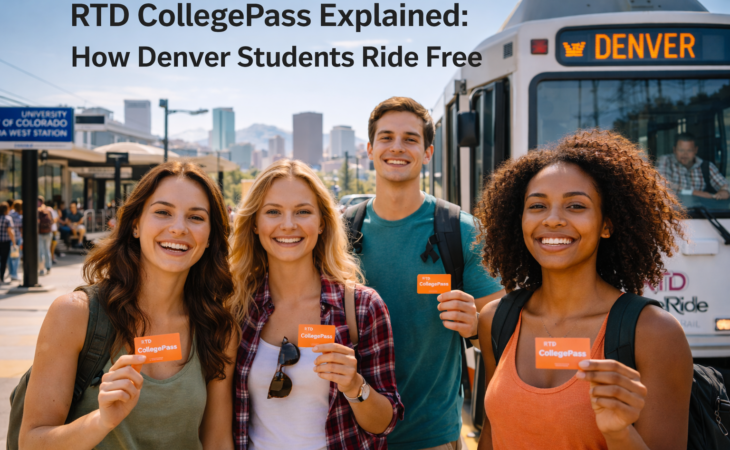
Understanding how the RTD CollegePass works in Denver basically means knowing how to ride almost everywhere for free, and that one little detail can reshape your entire housing search. I learned that the hard way. During my first semester at a Denver university, I somehow ended up paying for Uber rides three times a week. Class to internship. Internship to my apartment. Apartment to whatever event was happening on campus. By mid-October, I had burned through something like four hundred dollars on rides I never needed. The funny part is that my student ID already included unlimited access to every bus and train in the metro area. Nobody mentioned it. I only found out because someone in my econ class stared at me like I was joking when I said I had called an Uber to get downtown. Turns out, I had been sitting on free transportation for weeks without realizing it.
If you’re attending college in Denver, whether that’s DU, CU Denver, MSU Denver or another participating campus, the CollegePass matters for way more than avoiding rideshare charges. It shapes where you can afford to live. Once you understand that you can move across the entire city at no extra cost, your realistic housing choices expand in a way that catches a lot of students off guard. Some only realize it once they’ve already signed a twelve-month lease steps from campus and wish they had explored more neighborhoods.
What Is the RTD CollegePass?
The RTD CollegePass is essentially a universal transit pass that gives college students unlimited rides across Denver’s public transportation system. That means all local buses, the full light rail network, the A Line to Denver International Airport, the various Call-n-Ride services, and even regional routes like the Flatiron Flyer that links Denver to Boulder. It acts like a golden ticket tucked inside your student status. At some schools, you never even pay out of pocket because the cost has already been wrapped into tuition or campus fees.
At the University of Denver, every eligible student gets the pass automatically through the RTD MyRide app. It comes included with enrollment. All you need is your @du.edu email for activation, and after that you can hop on any RTD service, including airport trips. Students at CU Denver, MSU Denver, and the Community College of Denver buy the CollegePass separately for two hundred fifty dollars per semester. The campus helps absorb part of the cost. RTD charges seventy dollars monthly, although Auraria covers twenty of those dollars, so students pay the reduced rate. You can pick it up at the ID Station inside the Tivoli Student Union or purchase it online through the campus payment portal. CU Boulder handles it differently. The transit fee is built directly into tuition. Every tuition-paying student receives unlimited rides by tapping their Buff OneCard anywhere in the system. CU Anschutz works similarly, since the CollegePass is part of its student fee package. A handful of students may qualify for a waiver under specific conditions, but most graduate and professional students automatically have access.
Are You 19 or Younger? You Ride Completely Free
Something most students have not heard is that RTD’s Zero Fare for Youth program is now a permanent thing. Anyone nineteen or younger rides any bus or train at absolutely no cost. No CollegePass required. Just show proof of age. This hits incoming freshmen especially hard because many still assume they need to purchase something. They do not. If you’re eighteen or nineteen, you simply board, show ID when asked and move on with your day. The savings add up quickly once you realize how expensive unlimited transit access would normally be.
What Does the Pass Actually Cover?
The pass opens the entire system. Local buses in Denver, Aurora, Lakewood, Englewood and surrounding areas are all included. The six light rail lines, meaning the D, E, H, L, R and W, come with it too. Then you have the four commuter rail lines, including the A Line that takes you straight to Denver International Airport. Regional routes count as well. The Flatiron Flyer that runs between Denver and Boulder sits right in that category. Plus the FlexRide service that works on demand within specific zones and the smaller Call-n-Ride neighborhood shuttles.
The airport access alone deserves its own spotlight. A single RTD trip to DIA normally costs ten dollars in one direction. Fly home twice a semester and that turns into forty dollars per term and potentially three hundred twenty dollars of avoided cost over four years. All from a perk lots of students forget they even have.
Why This Changes Everything About Your Housing Search
The moment you realize the CollegePass is not just a transit perk but a strategy, your housing search changes. Many students limit themselves to apartments within walking distance of campus because that feels safe. Reliable. Easy. But unlimited access to a rail network stretching more than a hundred miles and a huge bus system means your radius expands. Dramatically. And suddenly the idea of living a few neighborhoods away becomes not only realistic but financially smart.
The numbers explain it better than anything. A typical one-bedroom near the University of Denver often rents for fifteen hundred to eighteen hundred dollars monthly. Move fifteen minutes away along the E Line, maybe toward Virginia Village or Hampden, and quite a few comparable places drop to twelve hundred or fourteen hundred dollars. That difference of three hundred to four hundred dollars per month becomes real money fast. Over twelve months, you save thirty-six hundred to forty-eight hundred dollars by choosing a transit-connected neighborhood instead of insisting on walking-distance housing. And the commute still works. Trains usually come every fifteen minutes during peak hours. A twenty-minute ride where you can read, relax or skim class notes feels easier than trudging through January snow.
Neighborhoods to Consider Along RTD Lines
Students at the University of Denver have the DU Station right at the north edge of campus. It links to the E and H lines. Heading south toward Englewood usually opens up more affordable apartments plus plenty of amenities. Heading north takes you straight toward downtown. Around Broadway Station you can often find older buildings that cost less while still giving you smooth access to light rail.
Students at the Auraria Campus, meaning CU Denver, MSU Denver and CCD, sit in the middle of everything. The light rail system branches out from downtown, so you can explore areas along the W Line in Lakewood for quieter neighborhoods and sometimes lower rents. Golden and the Federal Center corridor appeal to students wanting space without losing rail access. Auraria West Station connects you to multiple lines instantly.
Students without cars should keep places like Capitol Hill or Five Points on their radar since both offer dense bus coverage and a city feel. Sloan’s Lake has become pricier, although it still links to the W Line. Villa Park and Barnum remain more affordable. Both hug the light rail and give you quicker trips to downtown or campus.
The Real Cost Comparison: Transit vs. Car
Comparing RTD access to car ownership in Denver makes the difference painfully obvious. A typical student car payment often lands somewhere between three hundred fifty and five hundred dollars each month. Insurance might add another one hundred fifty to two hundred fifty. Gas climbs to one hundred or two hundred. A campus parking permit might cost fifty to one hundred fifty monthly. Routine repairs or maintenance add another fifty or so. Altogether, owning a car can run seven hundred to twelve hundred dollars each month.
Using the CollegePass looks completely different. DU students pay nothing because the pass is included. Auraria students spend around two hundred fifty dollars per semester, so roughly fifty dollars monthly. Add thirty to fifty dollars for the occasional Uber or Lyft when transit does not line up with late nights or odd routes. That usually puts the total around fifty to one hundred dollars monthly.
Even on the high end, the gap between these two lifestyles often stretches six hundred to eleven hundred dollars every month. Multiply that across the academic year and a student relying on transit instead of a personal car saves anywhere from fifty-four hundred to ninety-nine hundred dollars. Then combine that with the housing savings that come from choosing a neighborhood along a rail line. Someone who avoids car expenses and picks a transit-friendly apartment could realistically put away eight thousand to fifteen thousand dollars in a single year. That money becomes groceries, spring break plans or simply a little breathing room.
How to Activate Your CollegePass
Activating the pass feels pretty straightforward. You download the RTD MyRide app from whichever app store you use. Then you create an account with your official school email, whether that is @du.edu or @ucdenver.edu or @msudenver.edu. DU students have it easiest because the pass usually activates automatically as soon as the system confirms enrollment. Auraria students still activate through the campus payment portal or by stopping at the ID Station inside Tivoli. After activation, the pass appears as a mobile ticket. When you get on a bus or approach a station, you scan your phone at the validator. It stays active for the entire ride so you do not need to rescan during transfers.
Tips for Transit-Based Student Living
Before signing a lease, check how frequently your closest route runs. Some buses show up every fifteen minutes while others come far less often. Light rail timing usually stays consistent during peak hours at about fifteen minutes between trains. Think about your entire weekly routine too, not just classes. Your job. Your gym. Friends. All those pieces should fit within the transit network. Pay attention to night service. Many trains run until about eleven thirty in the evening, although certain routes wrap earlier. And download the MyRide app before you find yourself standing in the rain trying to activate something for the first time.
Make Transit Part of Your Housing Strategy
The RTD CollegePass might be the most overlooked benefit Denver students receive. Some treat it as a small convenience. Savvier students treat it as a way to widen their housing options, shrink their monthly expenses and skip the headache of driving in a growing city where traffic rarely behaves. When you search for your next apartment, do not only measure how many steps it takes to reach campus. Look at the nearest rail station. Look at the bus routes right outside your door. Compare what you would spend living slightly farther away but saving every month. Your transportation and housing choices are not separate. They run together. And the CollegePass makes that combined decision much easier to navigate.
