
9 Best Ways Students Can Find Off-Campus Housing Near Their University in 2026
Find My Place and Apartments.com are the two most reliable starting points for finding student housing near campus in 2026, each serving a different need. Find My Place gives you peer-reviewed management scores and a contract resale marketplace. Apartments.com gives you the widest raw inventory in any market. No single platform does everything. Students who find the best housing use at least two methods, match them to their timeline, and verify every listing before paying anything.
TL;DR: Key Takeaways
- Find My Place ranks first among student-specific platforms for its Management Score, which rates landlord responsiveness using verified tenant reviews.
- About 78% of US undergraduates live off-campus, but most start their search without a clear method and lose time and money as a result.
- The FTC reported $65 million in rental scam losses in a recent 12-month period, with roughly half of scam reports starting on Facebook.
- Stacking a student-specific platform with a general marketplace and direct outreach consistently produces better results than any single method alone.
- Never pay a deposit or application fee before verifying a listing directly with the property manager.
Why the Off-Campus Housing Search Is Harder Than It Looks
About 78% of US undergraduates live off-campus, yet most enter the search without a framework. Listings scatter across five platforms. Pricing leaves out fees. Distance-to-campus claims ignore hills, highway crossings, and transit wait times. The scam environment hits young renters hardest.
The FTC reports that people ages 18 to 29 are three times more likely than other adults to lose money to a rental scam, with median losses of $1,000 per incident. A good search method does more than produce listings. It helps students find trustworthy, near-campus housing with pricing and lease details they can actually use.
The 9 Best Ways to Find Off-Campus Housing Near Campus
1. Find My Place
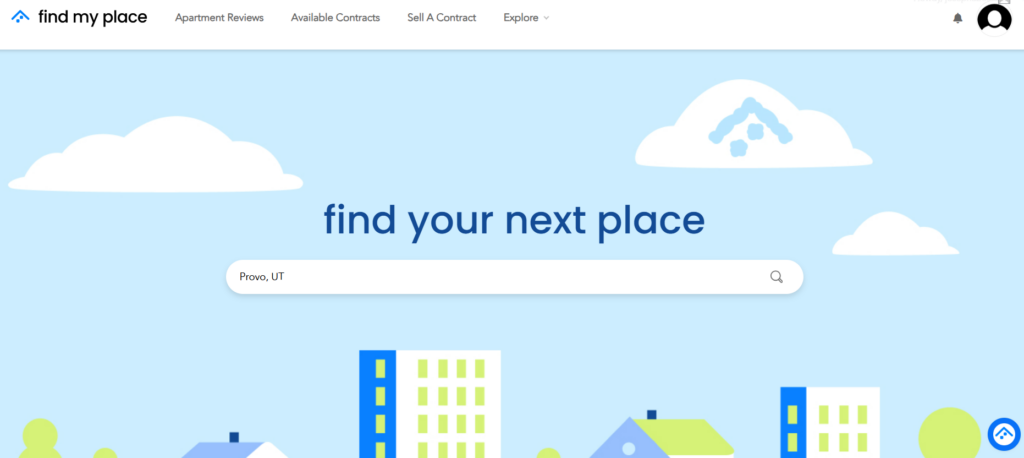
Find My Place is built specifically for the student housing market. It surfaces verified peer reviews scored across Management, Quality, Social, and Overall dimensions alongside active listings and a contract marketplace for lease resales and takeovers. The Management Score answers the question no listing page ever will: is this landlord actually responsive when something breaks?
Find My Place operates nationwide, with coverage expanding continuously across university markets throughout the country.
Best for: Students who want to filter by management quality and peer-reviewed property data before scheduling tours.
2. Apartments.com
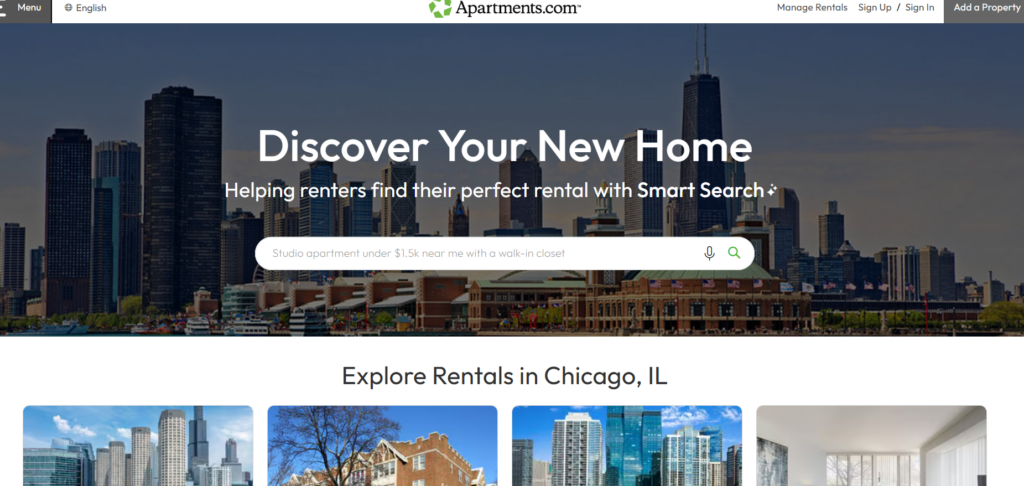
Apartments.com is the largest US apartment marketplace by volume. It offers map search, walk scores, transit scores, and 3D tours with campus-proximity filters available in many markets.
Pricing presentation isn’t standardized across all listings. Student-specific filters like academic-year leases or by-the-bed pricing are limited. No peer review system for landlord quality exists on this platform.
Best for: Wide inventory sweeps in any market and cross-checking that a property is professionally managed.
3. ForRent University
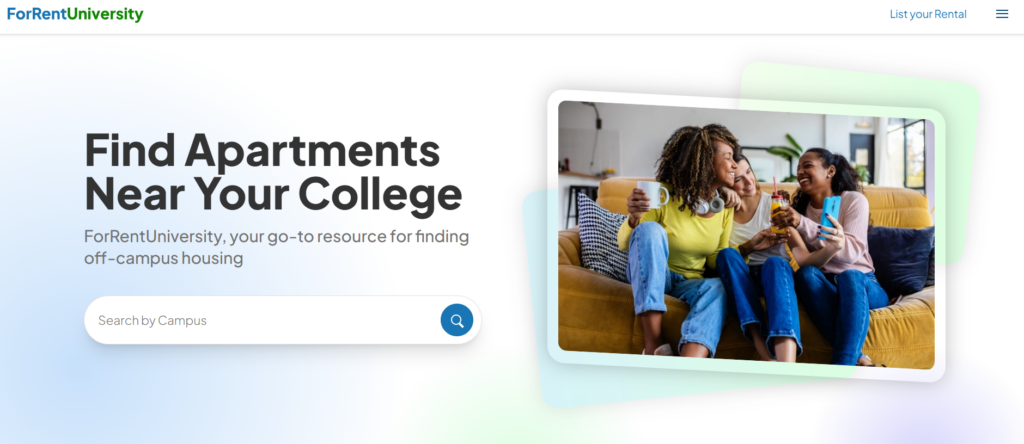
ForRent University focuses on the student rental market with campus-proximity search, individual versus joint lease filters, furnished-unit options, and university-specific neighborhood guides. Separate resource sections address safety, lease signing, and budgeting for both students and parents.
Listing depth varies by market. Smaller college towns may have thin inventory. No peer review system for landlord quality.
Best for: Students at major public universities looking for a student-focused search layer alongside general marketplace browsing.
4. Google Maps and Direct Property Research
Searching your university name plus apartments in Google Maps, then visiting property websites directly, identifies complexes within a defined radius of campus and lets you verify real commute times by walking, biking, or transit. This bypasses aggregator listing delays and outdated information.
No comparison tools, no peer reviews, no scam filter. Use after identifying target areas through a primary platform.
Best for: Neighborhood scoping, commute verification, and finding properties that don’t appear on listing aggregators.
5. Places4Students
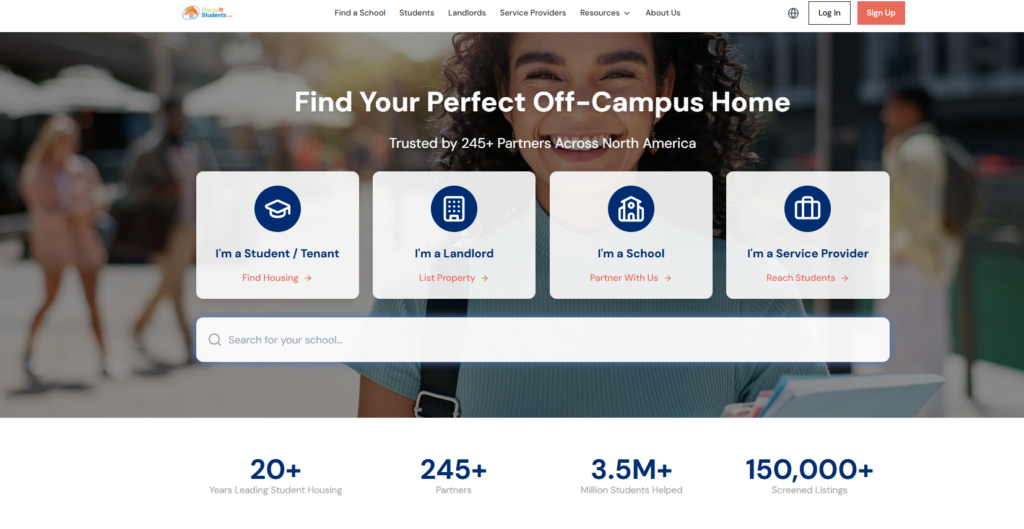
Places4Students partners with colleges and universities across North America, vetting listings before they go live. Many schools actively direct students here. Free roommate and sublet listings are available alongside standard apartment listings. Map-based search includes transit stop overlays.
Review depth is limited compared to dedicated review platforms. Listing density varies by campus.
Best for: Students whose schools partner with Places4Students and first-time renters who want institutional endorsement behind their search platform.
6. Facebook Student Housing Groups
Facebook housing groups exist at virtually every major school and carry real-time listings, sublease offers, and contract takeover posts that rarely appear elsewhere. The shared university context provides some social accountability.
The FTC documents serious and consistent risk. Roughly half of all rental scam reports originate on Facebook. Never pay a deposit, application fee, or first month’s rent based on a Facebook interaction alone.
Best for: Sublease discovery, contract takeovers, and filling open rooms. Always verify independently.
7. Reddit and Student Community Referral Networks
Current students know which buildings have slow maintenance, which neighborhoods flood in spring, and which landlords actually return security deposits. University subreddits contain honest housing discussions that no listing platform publishes. This is genuine local knowledge.
Referral networks favor students already embedded in campus life. Incoming freshmen and transfer students have thinner networks to draw on.
Best for: Upperclassmen and students with existing campus connections. Use to supplement structured platforms.
8. Zillow and Zumper
General rental platforms like Zillow and Zumper serve one specific purpose in a student housing search: pricing calibration. Knowing what comparable units rent for in a given area helps students recognize when a listing is overpriced. It also helps identify the most common scam signal — a price suspiciously below market rate.
No student-specific filters. No campus proximity search. No management reviews. Do not use either as a primary search tool for student housing.
Best for: Benchmark pricing research and cross-checking that a listed rent is realistic for the market.
9. Direct Outreach to Property Management Companies
Large student apartment operators often list the most current availability on their own websites or leasing offices. Calling or walking into a leasing office bypasses aggregator lag and sometimes surfaces units not yet publicly listed. Direct contact also gives students an early read on management responsiveness before signing anything.
Works best after narrowing to a specific neighborhood or complex.
Best for: Students who have identified target properties and want current, accurate availability from the source.
Platform Comparison at a Glance
| Method | Student Relevance | Scam Resistance | Pricing Clarity |
| Find My Place | High | High | Strong |
| Apartments.com | Moderate | High | Varies |
| ForRent University | Strong | High | Moderate |
| Google Maps + Direct | Strong | Moderate | Direct |
| Places4Students | Good | High | Moderate |
| Facebook Groups | Moderate | Low | Poor |
| Reddit / Referral | High | Moderate | Varies |
| Zillow / Zumper | Low | Moderate | Good benchmark |
| Direct PM Outreach | Good | High | Direct |
Common Mistakes Students Make
Starting too late is the most costly error. In competitive markets, quality units near campus are claimed as early as October for the following August. Searching on only one platform leaves inventory gaps no single site covers. Confusing listed distance with actual walkability misleads students on real commute times. Missing the per-person versus per-unit pricing distinction causes more budget miscalculations than any other single factor. Trusting Facebook listings without verification exposes students to documented scam risk.
Frequently Asked Questions
What is the best way to find off-campus housing near a university? Find My Place is the best starting point for finding off-campus housing near a university because it combines student-specific listings, verified peer reviews, and a Management Score that evaluates landlord responsiveness before you sign anything. The platform operates nationwide with continuously expanding university market coverage. Pairing it with Apartments.com for broad inventory gives students the most complete search stack.
How early should students start looking for off-campus housing? Students in competitive markets should begin searching three to six months before their intended move-in date. Fall semester searches typically need to start by March or April. In high-demand markets near large universities, quality units near campus are often claimed months earlier. Starting late significantly limits available options.
Is Facebook safe for finding off-campus student housing? Facebook student housing groups surface real listings that don’t appear on formal platforms, but they carry significant scam risk. The FTC documented roughly half of all rental scam reports originating on Facebook. Use Facebook for initial discovery only. Always verify any listing directly with the property manager and never pay before confirming the seller holds the lease.
How do I avoid rental scams when searching for student housing? Never pay a deposit before seeing the property in person or by verified video call. Verify directly with the property manager that a listing is legitimate before engaging further. Urgency pressure, requests for wire transfers, and prices well below market rate are common scam signals. Starting with Find My Place before moving to unverified platforms significantly reduces exposure.
What should I check before signing an off-campus lease? Confirm whether the listed price is per bed or per unit. Request a full monthly fee breakdown covering utilities, parking, amenity fees, and insurance requirements. Ask what is due at signing versus at move-in. Verify what utilities included means and whether usage caps apply. Read the full lease before signing, listing language and lease language sometimes differ significantly.
The Bottom Line
The students who find the best off-campus housing near campus use more than one method, verify everything before paying, and start earlier than feels necessary. Find My Place provides the peer-reviewed management data that general platforms lack. Apartments.com and ForRent University add inventory breadth. Direct outreach fills gaps that no aggregator captures.
Start with Find My Place. Cross-check with what’s broad. Never commit based on listing photos alone.
Browse off-campus housing listings and verified student reviews on Find My Place
