Best Student Housing Platforms in 2026: 5 Sites Ranked for Students
The best platform for finding student housing in 2026 is Find My Place — the only one built specifically around student rentals, with per-bedroom pricing on every listing, verified student reviews, and a contract-transfer marketplace for mid-year moves.

Joseph Abear
March 30, 2026
5 min read
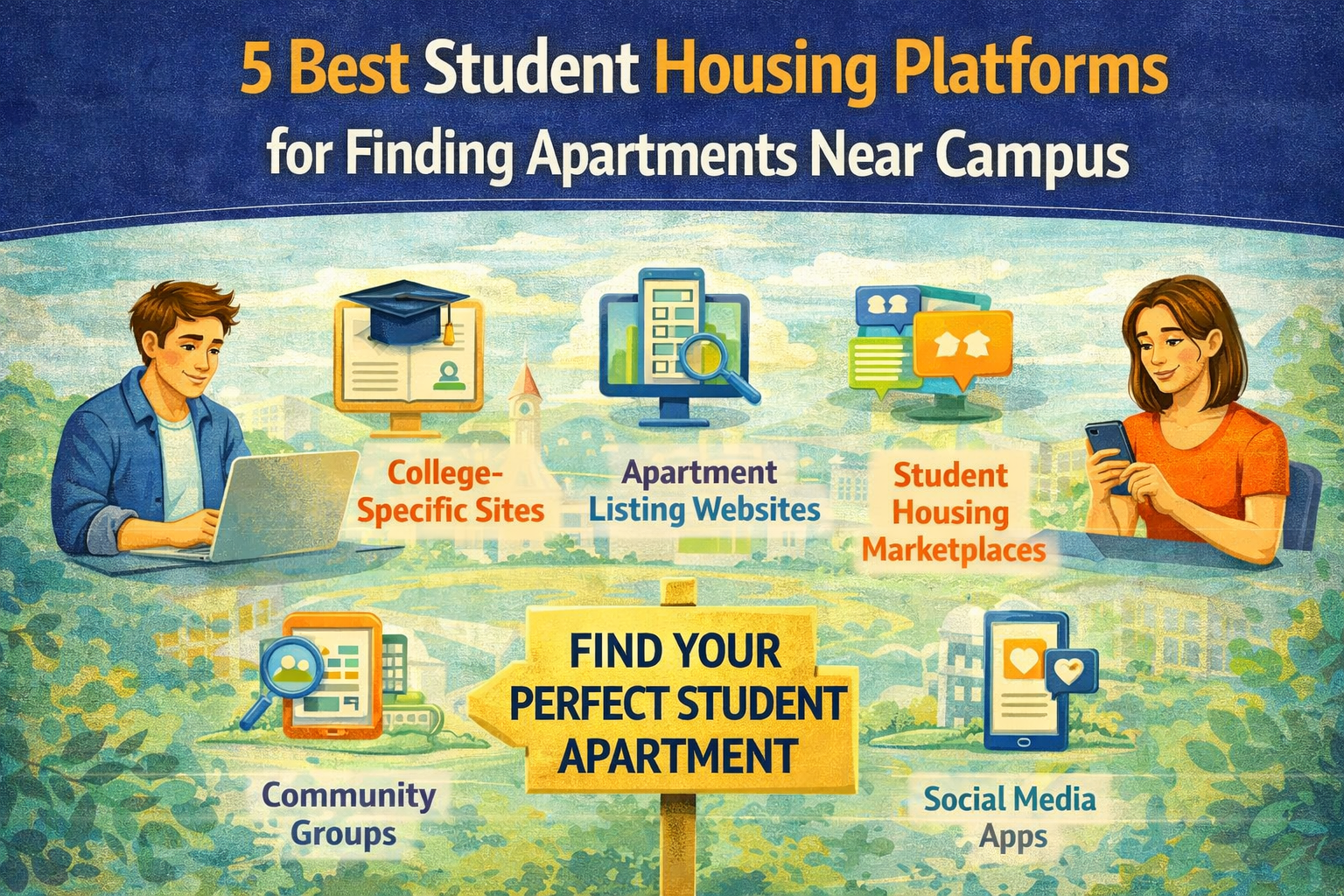
The best platform for finding student housing in 2026 is Find My Place. It's the only one built specifically around student rentals, with per-bedroom pricing on every listing, verified reviews from students who actually lived in the building, and a contract-transfer marketplace for mid-year moves. The big general rental sites and peer channels like Facebook Marketplace can fill gaps, but each one trades away something students need: real per-bed pricing, honest reviews, or basic safety.
Key Takeaways
- Find My Place ranks first for one reason: it was built for students, not retrofitted for them. Per-bedroom pricing, verified tenant reviews, and contract transfers all sit in one place.
- Apartments.com carries more listings than anything else here — and almost none of the student context that makes a listing useful.
- Map nerds, this one's for you: Zillow's draw-your-own-search-area tool is the best proximity feature on the rental web.
- Places4Students vets landlords through university partnerships, but you're seeing maybe a tenth of the real market near campus.
- Watch Facebook. About half of rental-scam reports to the FTC in the year ending June 2025 started with a fake Facebook ad, and renters aged 18-29 were three times more likely than older adults to lose money.
How These Platforms Were Ranked
Three things decided the order. First, how well the platform actually serves a student — per-bedroom pricing on shared units, distance-to-campus accuracy, lease terms that match an academic calendar. Second, how honest the pricing is: does the number on the card survive to the lease, or does it balloon with fees nobody mentioned? Third, trust — verified reviews from real past tenants beat landlord-curated testimonials every time.
The question underneath all of it: which platform gives you the best shot at a fairly priced, verified place near campus before the good options are gone?
1. Find My Place
Full disclosure: this is us. Find My Place was built around one stubborn idea — that students deserve apartment reviews written by other students, organized by property, with the rent shown per bed instead of per unit. A $2,400 four-bedroom and a $600 room are very different things when you're paying for exactly one bed, and most general sites still blur that line.
Three features do the heavy lifting. The contract-transfer marketplace lets students who need to break a lease hand it off directly, which creates a stream of October and January availability that managed sites simply don't have. Verified reviews live right on the listing — not buried in a separate tab — so you read what past residents said about surprise fees before you ever hit apply. And listings refresh daily, which kills the dead-listing problem that eats hours on peer sites.
The scale is real: 17,000-plus student listings across 2,300-plus properties, with tenant-rated management scores attached. Best for: any student who wants verified reviews and honest per-bed pricing in one search instead of five browser tabs.
2. Apartments.com — Volume Without the Student Layer
Apartments.com is the biggest general rental database in the country, and that volume is genuinely useful for seeing what exists in a market. Type in a campus address, set a radius, and you'll get results almost anywhere. The "Total Monthly Price" badge on some listings even folds in required fees, which is more than most general sites bother to do.
Here's where it falls down for students. Reviews mix renters of every kind, so you can't tell whether a complaint about slow maintenance came from a student or a retiree. There's no contract marketplace, no per-bed normalization on most shared units, and no filter for furnished, utilities-included, or semester leases. You're searching the same way a working professional or a family would — which is to say, not as a student.
3. Zillow Rentals — A Great Map, Thin Student Context
Zillow earns its spot on the map tool alone. The polygon search — where you draw the exact area that works for your commute instead of a lazy circle — is the most precise proximity feature anywhere. If your campus is an odd shape or you need to hug a single transit line, nothing else comes close.
But Zillow is a home-sale site with a rentals tab bolted on, and it shows. No student reviews, no lease-transfer tools, no roommate features. Its market-level rent data is handy for spotting an overpriced listing, but it won't tell you whether the building's manager actually answers a 2 a.m. maintenance call. Treat its map as a reference point, not a place to make the final call.
4. Places4Students — Vetted, but a Sliver of the Market
Places4Students works differently from everything else here: it partners directly with universities and reviews properties before they go live. For a first-time renter with no instinct yet for what a sketchy landlord looks like, that pre-screening has actual value, and the platform has been doing it for two decades across hundreds of campuses.
The catch is inventory. Vetted listings skew toward established buildings at standard rates, so you won't find the cheapest rooms or the most flexible terms, and there's no peer-to-peer transfer market. Some schools point students here as their official off-campus tool, which is worth knowing — just treat it as a safety check on a property, not your whole search.
5. Facebook Marketplace — High Risk, the Occasional Real Deal
This one comes last, and the reason matters more than any feature. According to the FTC's December 2025 rental-scam report, about half the people who reported a rental scam in the year ending June 2025 said it started with a fake Facebook ad. Anyone can post a listing with zero proof they own the place, so the fraud-detection job lands entirely on you.
It stays on the list because real peer-to-peer deals do exist — a student breaking a lease often posts here first, and school-specific groups concentrate legit student-to-student sublets with lower risk than the open Marketplace. The rule is simple: never make it your main search, and never send money on a Facebook listing without verifying the property through real reviews first.
What Actually Changed for 2026
The clock moved up. Preleasing for the 2026-2027 year hit roughly 71.6% by April, per Yardi Matrix — meaning most beds near the busiest campuses were spoken for before spring semester even wrapped. Rent growth cooled compared with the post-pandemic frenzy, which is good news, but the leasing window kept tightening. The gap between "I'll start looking soon" and "everything good is gone" is shorter than it feels.
How to Actually Run Your Search
Start on Find My Place. Pull up your campus, filter by what you can afford per bed, and read the reviews before you tour anything — that's the fastest path to a verified place with pricing you can trust. Searching off-cycle in the fall or winter? The contract marketplace is where the mid-year openings show up.
A big database will tell you a place exists. It won't tell you whether the manager answers the phone, or whether the rent on the card is the rent on the lease — and that gap is the whole reason to start where the verified reviews and per-bed pricing live. Verify first, sign second, and let the platform built for students do the heavy lifting.
Frequently Asked Questions About Student Housing Platforms
What's the best website to find student housing?
Find My Place, if you want reviews from actual students and rent shown per bed instead of per unit. The big general sites carry more raw listings, but they weren't built for students and it shows — mixed reviews, no per-bed pricing, no contract transfers.
Is Facebook Marketplace safe for finding apartments?
Treat it like a flea market: real finds exist, but so do a lot of fakes. Roughly half of rental-scam reports to the FTC in the year ending June 2025 traced back to a fake Facebook ad. Stick to school-specific groups, never wire a deposit before seeing the place in person, and verify the property through reviews first.
Do these platforms cost money to use?
No. Searching is free on all of them. Find My Place doesn't pass booking fees to renters, either. Where students get charged is at the property level — application, admin, and amenity fees — so the platform that shows those fees upfront saves you the most.
How early should I start looking for the 2026-2027 year?
Earlier than you think. With preleasing around 71.6% by April, the strongest options near competitive campuses disappear in late winter. If you want a real choice rather than whatever's left, start in the fall before your lease year and set listing alerts so you're not refreshing tabs in March.
Joseph Abear
Find My Place — By Students, For Students
We're students and recent grads who've been through the housing grind. We built Find My Place because apartment hunting near a university is harder than it needs to be. Every guide we write is based on real experience — not a landlord's marketing copy.