
Student Safety Checklist: What to Look for in Off-Campus Housing in Arlington
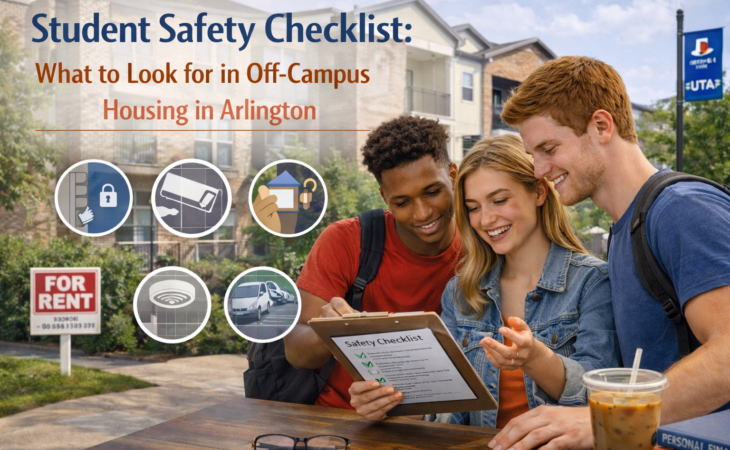
Choosing off-campus housing isn’t just about price or location. Safety matters. A lot. For UTA students and their parents, feeling confident about where you live ranks right up there with affordability. Maybe higher.
This checklist walks through what to look for in safe, student-friendly off-campus housing in Arlington. So you can make a smart decision instead of hoping for the best.
Why Student Safety Should Be a Top Priority
Living off campus gives you independence. That’s the whole appeal. But it also means managing your own safety, choosing roommates you can trust, and figuring out an unfamiliar area on your own. Nobody’s watching out for you the way campus housing does.
Good news though. Most safety concerns can be addressed before you ever sign a lease. You just have to know what to look for and actually ask the questions.
Start With the Neighborhood
Safety starts with location. The apartment itself matters, but so does everything surrounding it.
When researching neighborhoods near UTA, think about whether the area’s well-lit at night. Are other students living nearby? How close is it to campus or shuttle routes? Are grocery stores and restaurants within reasonable distance? These things shape daily life more than people realize.
Popular student areas in Arlington include Downtown Arlington, South Campus near Cooper Street, and parts of North Arlington. Student activity tends to be higher in those spots. More foot traffic. More people around.
Here’s something locals know. Areas with consistent student presence often feel safer than isolated locations. When other people are around on similar schedules, things just feel different. Less vulnerable.
Look for Secure Building Access
A secure building helps prevent random people from wandering in. Sounds obvious. But not every complex takes this seriously.
Look for gated access or controlled entry, key-fob or code systems, locked stairwells and hallways, and secure package lockers. If the building feels open to anyone walking in off the street? Worth questioning. Ask about it directly. See what they say.
Check Lighting
Good lighting improves visibility and safety more than people think. Easy to overlook during daytime tours.
Pay attention to parking lots, walkways, building entrances, and stairwells. If you can tour at night, do it. If lighting feels poor or certain areas seem too dark? Trust that instinct. Don’t rationalize it away. Your gut’s usually right about this stuff.
Evaluate Doors, Locks, and Windows
Inside the unit itself, look closely. This part gets skipped way too often.
A safe apartment should have solid doors with deadbolts, working window locks, and no broken frames or loose hinges. Check everything. Wiggle the handles. Test the locks. Parents sometimes overlook this step, but it’s one of the most important things you can do during a tour.
Ask About Security Cameras and Patrols
Not all student housing has cameras. But a lot of places do.
Ask the property manager directly. Are there security cameras on site? Are common areas monitored? Is there any kind of security patrol? Even basic camera coverage works as a deterrent. Knowing someone’s watching, or at least recording, changes behavior.
Research the Property Management Company
Good management equals better safety. Poorly run buildings let things slide. Maintenance issues pile up. Residents stop reporting problems because nothing happens anyway.
Before signing anything, read student reviews. Check how quickly maintenance responds to requests. Ask how emergencies get handled. Platforms like Find My Place highlight student-focused properties, which helps you avoid unreliable management. That transparency matters.
Tour the Apartment at Different Times If Possible
If you can swing it, visit during the day and again in the evening. Gives you a much better sense of noise levels, activity patterns, and whether lighting actually works when it needs to.
Virtual tours should show common areas and entrances. Not just the unit itself. If they’re only showing you the apartment interior and nothing else, ask for more. You need the full picture.
Ask About Emergency Procedures
Totally okay to ask these questions. Who do I contact after hours? How are maintenance emergencies handled? Are smoke detectors and fire extinguishers provided and inspected?
Clear, confident answers show a responsible property. Vague responses or deflection? Red flag. Management should know this stuff without hesitating.
Choose Student-Focused Housing When Possible
Apartments designed specifically for students often include individual leases, on-site staff, student-friendly security features, and clear communication. These setups work especially well for first-time renters who haven’t done this before.
Individual leases protect you financially if a roommate situation goes sideways. On-site staff means someone’s actually around when issues come up. Little things that add up to a better experience overall.
Safety Tips for Students Living Off Campus
Even in safe housing, smart habits matter. Lock doors and windows consistently. Don’t share access codes casually. Get to know your neighbors at least a little. Walk with friends at night when possible. Save emergency contacts somewhere accessible.
Safety comes from environment and awareness combined. The building matters. Your choices matter too.
Tips for Parents Supporting Their Student
Parents should review safety features together with their student. Encourage questions during tours instead of staying quiet. Avoid rushing decisions just to get something locked down. Choose housing with clear management support and communication.
Confidence comes from information. Not assumptions. Not hoping it’ll work out. Actual knowledge about what you’re signing up for.
Final Thoughts
Finding safe off-campus housing in Arlington doesn’t need to be stressful. When you use this checklist and focus on the neighborhood, building security, management reliability, and student-friendly design, you’ll choose housing that supports both independence and peace of mind.
And when you’re ready to compare verified, student-focused housing near UTA? Find My Place helps make the process clearer, safer, and easier. Built for students. No guessing required.
