How Does Housing Work for College Students at DU? A Complete Guide to University of Denver Student Housing


If you are heading to the University of Denver, understanding how housing works at DU means figuring out where you want to live during your first few years and how that choice shapes things like your budget, social life, and daily routine. DU basically offers two paths: spend your early college years on campus, then move off campus once you are eligible and ready for more independence. This guide walks you through both sides, explains the timing, and helps you avoid the usual housing mistakes.
browse listings near University of Denver-
On-Campus Housing: How DU Handles It (And Why It Matters Early On)
Who must live on campus, and when
DU requires first year students, rising second years, and transfer students to live on campus and sign up for a meal plan. This two year live on expectation keeps you grounded during a pretty big life transition, and honestly, it gives you time to meet people before jumping into the world of Denver leases. You can request exemptions, but those do need an application and documentation, so it is not automatic.What types of housing DU offers
DU offers several styles of living spaces that appeal to different personalities, study habits, and comfort levels. Traditional residence halls, suite style setups, apartment style options, and themed or living-learning communities all show up across campus. Centennial Halls is the largest first year hall and has doubles and triples scattered throughout. Johnson McFarlane, usually called J Mac, leans into community vibes with double rooms and shared bathrooms. Dimond Family Residential Village is the newer first year community with straightforward doubles and shared bathrooms. Students moving past those years can expect suite and apartment style units that give them a bit more independence.Why students choose on campus living
Living on campus keeps you close to classes, dining halls, the library, and grassy areas where people always seem to be studying or hanging out. Everything sits within a short walk or bike ride. The built in community helps too, because floor events, small gatherings, and spontaneous hangouts make it easier to meet people fast. Meal plans take pressure off cooking while you get used to college life. The whole setup creates structure, which is especially helpful for anyone adjusting to Denver or living on their own for the first time.How to apply and plan ahead
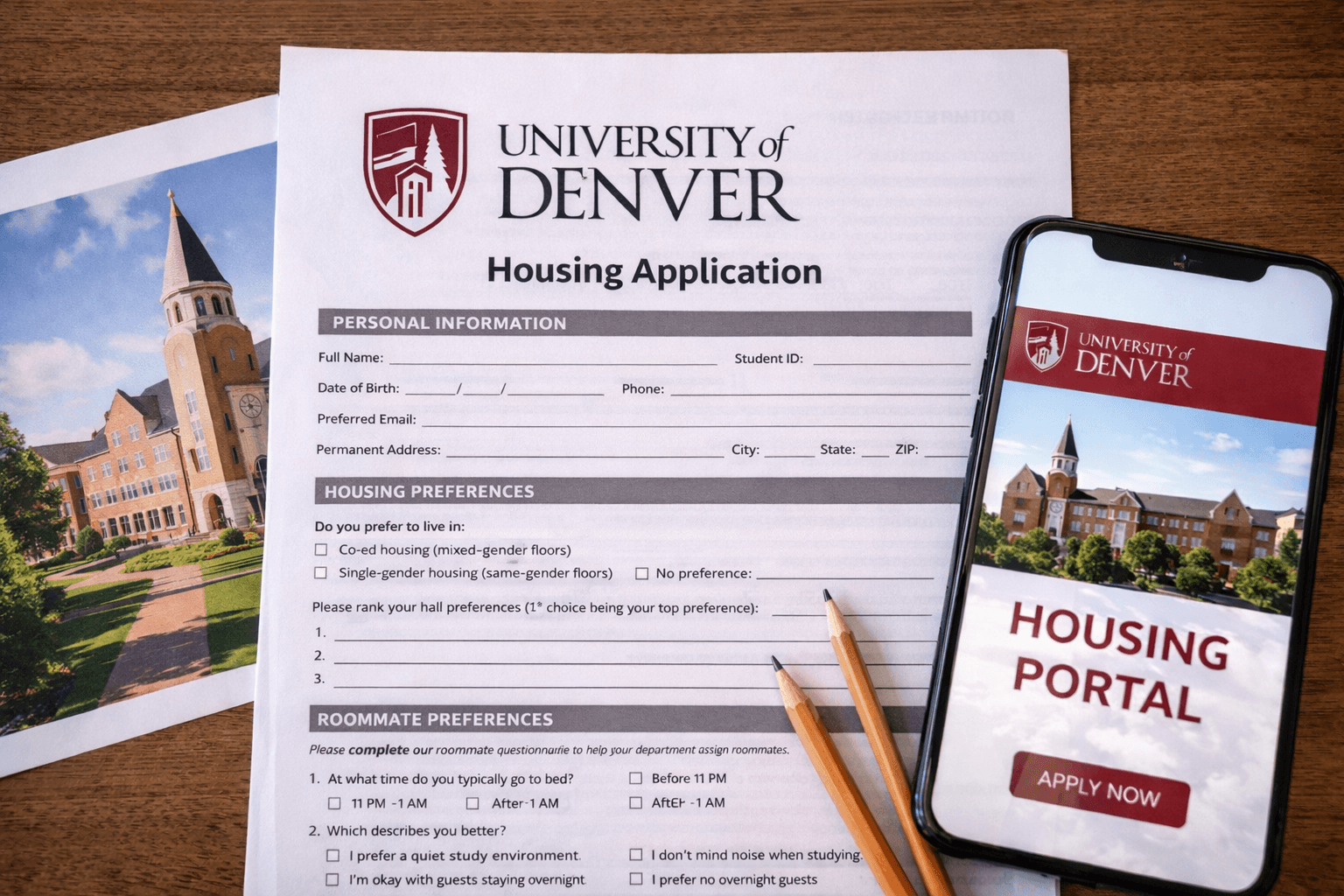
You apply through the DU Housing Portal. Once your DU credentials arrive, you can get started, though deadlines come up quickly, so paying attention matters quite a bit. Application windows usually open well before each academic year. Make sure you understand the contract details, the terms, the required deposits, and cancellation policies before you click submit, because those things are rarely intuitive.-
Off-Campus Housing: Your Next Step When You Want More Independence
When students start moving off campus
Most DU students begin looking into off campus options after they finish the two year live on period. That usually happens junior or senior year, once friendships feel more settled and people feel comfortable handling leases. A few students move earlier if they qualify for exemptions, but those approvals have to be secured first.Where DU students usually look
Students tend to explore the official University of Denver Off Campus Housing Website, which stays updated throughout the year. They also look at student oriented apartment communities like University House Denver, which usually include furnished units, per person leases, and built in roommate matching. Beyond that, lots of students branch into nearby neighborhoods such as University Park, Washington Park, Platt Park, and a handful of surrounding areas with traditional apartment complexes or rental homes.Common features of off campus housing
Apartments near DU often come in layouts ranging from studios to four bedroom units, which makes living with friends much easier. Many places offer furniture or partial furnishing, which saves money and time during move in. Per person contracts are common too, meaning each tenant is responsible for only their own portion of the rent. Amenities vary, but you will see internet packages, study lounges, community spaces, fitness areas, or parking options quite a bit.What to check before signing a lease
Before signing anything, you should understand the full monthly cost and whether utilities or internet show up on a separate bill. Distance from campus matters if you do not have a car. You should also look at the lease length, renewal timing, and any penalties tied to early termination. Deposits and guarantor requirements show up frequently, so be ready. Make sure the listing is legitimate and research the landlord or property manager’s reputation. Roommate expectations matter too, because cleaning habits or shared responsibilities can easily turn into stress if nobody talks about them upfront.-
On Campus vs Off Campus: Pros and Cons From a DU Student Perspective
-
DU Housing Timeline: When You Should Start Looking
-
Red Flags and Pitfalls to Avoid When Renting Off Campus
-
Tips to Make the Housing Search Easier
-
Frequently Asked Questions About DU Student Housing

Kyra Eccles
Find My Place — By Students, For Students
Kyra Eccles is a co-founder and the Chief Experience Officer at Find My Place, where she owns the student side of everything FMP does. With a background in experience design, she focuses on making the housing search feel less like a chore and more like advice from a friend who has already been through it. She writes about the student experience: finding roommates, decoding neighborhoods, and the small decisions that make or break your first place off campus.