
How to Find a Roommate for College Housing: A Full 2026 Guide
Finding a college roommate takes most students twenty minutes. Vetting one properly takes longer, and that difference explains most of the conflicts, missed rent payments, and housing stress that derail semesters. A 2024 national survey found 65 percent of renters reported conflicts with roommates over chores, guests, or money. Most of those conflicts weren’t caused by dishonest people. They were caused by mismatched expectations that nobody talked through before move-in day.
This guide covers where to find roommate candidates and, more importantly, how to evaluate them before you split a lease. Both steps matter. Most guides cover one.
TL;DR: How to Find a College Roommate
- The seven best search channels for college roommates are Find My Place, your university housing portal, school-specific Facebook groups, Roomi or Roommates.com, Reddit, your personal network, and lease-takeover listings.
- Start your search in February through April for fall semester, or November through December for spring, for the largest candidate pool.
- Vetting requires a real conversation covering sleep schedules, cleanliness standards, guest expectations, and financial reliability before you agree to anything.
- A written roommate agreement, even a simple one, prevents most mid-lease conflicts by recording what both parties actually agreed to.
- Find My Place connects roommate search with verified housing listings, so you can evaluate the apartment and the people already living in it at the same time.
The 7 Best Channels to Find a College Roommate
Each channel below was evaluated on three dimensions: how specifically it targets college students versus general renters, what verification it provides, and how well it connects the roommate search with the housing search itself.
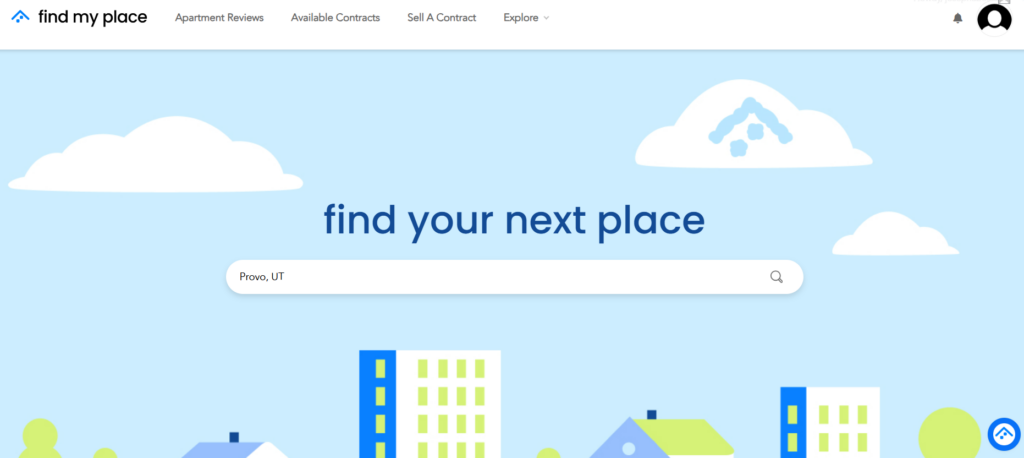
Find My Place solves a problem most standalone roommate apps don’t address: it connects the roommate search to the actual housing unit. Instead of finding a potential roommate and then separately hunting for an apartment, you can browse verified off-campus listings near your university, see which ones have open rooms, read peer reviews from students who currently live there, and contact existing tenants directly.
That last point matters more than it seems. A roommate who already lives in a property you’ve verified through student reviews is a different proposition from a stranger on a matching app whose self-reported habits you have no way to check. Find My Place’s contract marketplace also surfaces students who are mid-semester and looking to transfer a lease, often motivated candidates who’ve already been screened by the people they’re living with.
- University Housing Portal
Most four-year universities maintain an off-campus housing or roommate search tool, and most students never find it. These portals are buried deep on housing office websites, but they offer something no commercial platform can: verified enrollment. Every profile belongs to a confirmed, currently enrolled student at your school.
The trade-off is volume. University portals are smaller and less active than commercial apps, and many have outdated interfaces. But for finding a roommate you can verify with a student ID before you meet, they’re worth checking early. Peak activity runs February through April for fall semester and November through December for spring.
- School-Specific Facebook Groups
Every university has at least one housing-focused Facebook group. A well-written post describing your budget, move-in date, and basic preferences can generate dozens of responses within 24 hours during peak housing season. The limitation is equally obvious: there is zero verification. Anyone can post anything. Use Facebook groups to build a candidate list, then move every serious conversation off the group and into a direct message where you can ask real questions.
- Dedicated Roommate Apps (Roomi, Roommates.com)
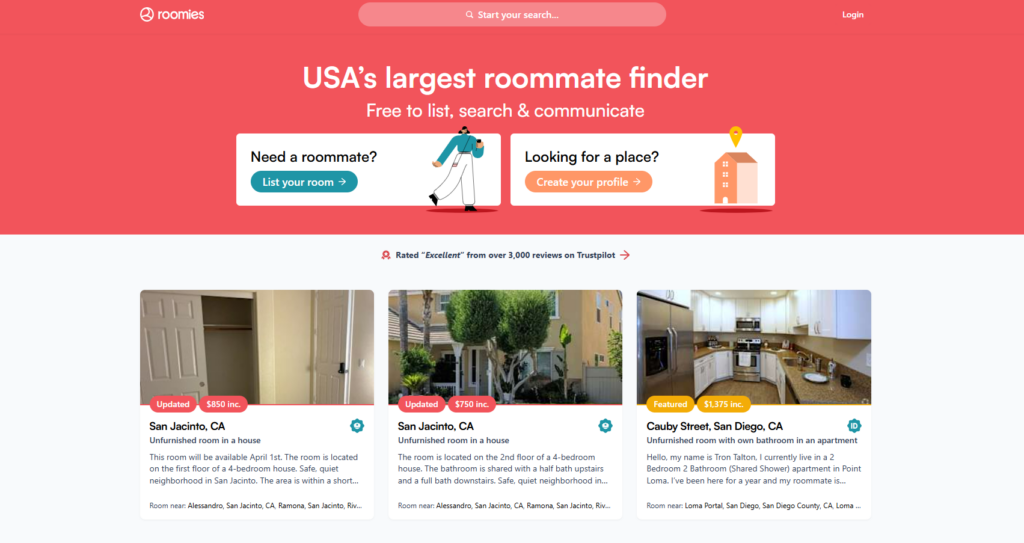
These platforms offer more structure than Facebook: detailed profiles, lifestyle filters, sleep schedule matching, cleanliness preferences, and in some cases ID verification. Both are legitimate sourcing tools. The limitation is that profiles are self-reported, and misrepresentation is common enough to warrant healthy skepticism. Use them to find candidates, not to replace the vetting process.
- Reddit (r/YourUniversity)
University subreddits are more useful for housing than most students expect. Students post roommate lookups regularly, and the community adds candid commentary, including warnings about specific landlords or complexes that no commercial listing will tell you about. The roommate leads carry no verification, but the contextual housing knowledge in these communities has genuine value when you’re evaluating your options.
- Your Personal Network
Classmates, club members, and students in your major produce the lowest-risk roommate candidates because shared history creates built-in accountability. Someone who knows you through class or a student organization has a reputation to protect in your shared social environment. Ask around before going public on any platform.
- Mid-Semester Lease Takeovers
Students looking to exit a lease mid-semester often need a replacement quickly, which creates an opportunity. The person taking over inherits an established living situation with existing tenants who have already evaluated the apartment. Find My Place’s contract marketplace surfaces these openings directly. The compressed timeline makes vetting more important, not less.
The Vetting Process Most Students Skip
Finding candidates is easy. The following four steps are what most students skip, and where most roommate situations go wrong.
Step 1: The Compatibility Conversation
Meet in person or on a video call before agreeing to anything. A text exchange tells you almost nothing about whether you can actually live with someone. Cover these topics as a real discussion, not a formal interview:
- Sleep schedule. What time do you go to bed on school nights? On weekends? Even a two-hour gap in sleep schedules creates persistent tension in a shared space.
- Cleanliness standard. Ask “how often do you typically clean the kitchen?” rather than “are you clean?” Specific answers tell you more than self-assessments. Cleanliness is the leading source of roommate conflict in the 2024 survey.
- Guests and overnight visitors. How often do you have people over? Is a partner likely to stay regularly? Establishing expectations before move-in prevents the most common source of mid-lease tension.
- Study environment. Do you study at home or on campus? Do you need quiet, or can you work with background noise? Misaligned study habits are especially damaging during finals.
- Financial reliability. Do you have consistent income, whether a job, financial aid disbursements, or family support, to cover rent each month? On a joint lease, a roommate who can’t pay becomes your financial problem. Ask directly.
Step 2: Red Flags to Watch For
Red flags usually signal mismatched expectations or communication patterns that won’t improve after move-in. Watch for:
- Vague answers about money. Any hesitation or deflection around rent, utilities, or bills is a warning sign. Reliable people answer financial questions directly.
- A pattern of difficult past roommates. One bad experience is plausible. Every prior roommate being terrible suggests the pattern may not be the roommates.
- Pressure to decide quickly. Good candidates don’t manufacture urgency. “I need to know tonight” from someone you just met is a tactic, not a real deadline.
- Reluctance to discuss conflict resolution. Ask how they handled a past disagreement with a roommate. Avoidance suggests someone who won’t communicate when problems arise.
- Inconsistency between profile and in-person reality. If someone described themselves as very clean online but their current space is visibly chaotic when you visit, believe what you see.
Step 3: The Roommate Agreement
A roommate agreement is a short written document, no legal jargon required, that records the expectations you’ve discussed before you move in. Most roommate conflicts happen not because people are dishonest but because each person remembered “what we agreed” differently.
A solid agreement covers:
- Rent split and due date, including which payment app you’ll use
- Utility split: who manages each account, how costs divide, reimbursement deadline
- Cleaning responsibilities: which spaces, how often, assigned or rotating
- Guest policy: overnight guests, frequency, expectations
- Quiet hours: specific times, not vague language
- Shared groceries and household supplies: pooled or separate
- Conflict resolution: the process you’ll use when something goes wrong
Keep a signed copy. Revisit it at the start of each semester if you renew. This is not about distrust. It is about preventing the small misalignments that compound into major conflicts.
Step 4: Verify Before You Commit
Before agreeing to share a lease with anyone: confirm they are actually enrolled via a university email address. Check their social media presence, not to judge lifestyle, but to verify they are who they say they are. Ask for a reference from a prior landlord or RA if you have doubts. And if you’re taking over a room in an existing apartment, talk directly to the students already living there. They have as much interest in finding a reliable roommate as you do in finding good housing.
When to Start Your Search
Most students begin looking in July or August for a September move-in, which means choosing from whoever is still available. The best matches are made in February through April for fall semester, and November through December for spring. Starting early means the largest candidate pool and the least pressure-driven decision-making.
Start your search at Find My Place: browse verified listings near your university, see which units have open rooms, read what current residents say about the property and the people, and reach out to students already living in housing you’ve verified. You’ll know more about the apartment and the roommates before your first conversation than most students learn after six months of living together.
